Overwatch Tier List Explained: The Complete Ranking Guide
Learn how the Overwatch tier list works — the win-rate formula, pick-rate floor and 7-day data behind every S-tier hero. Read once, use it every season.
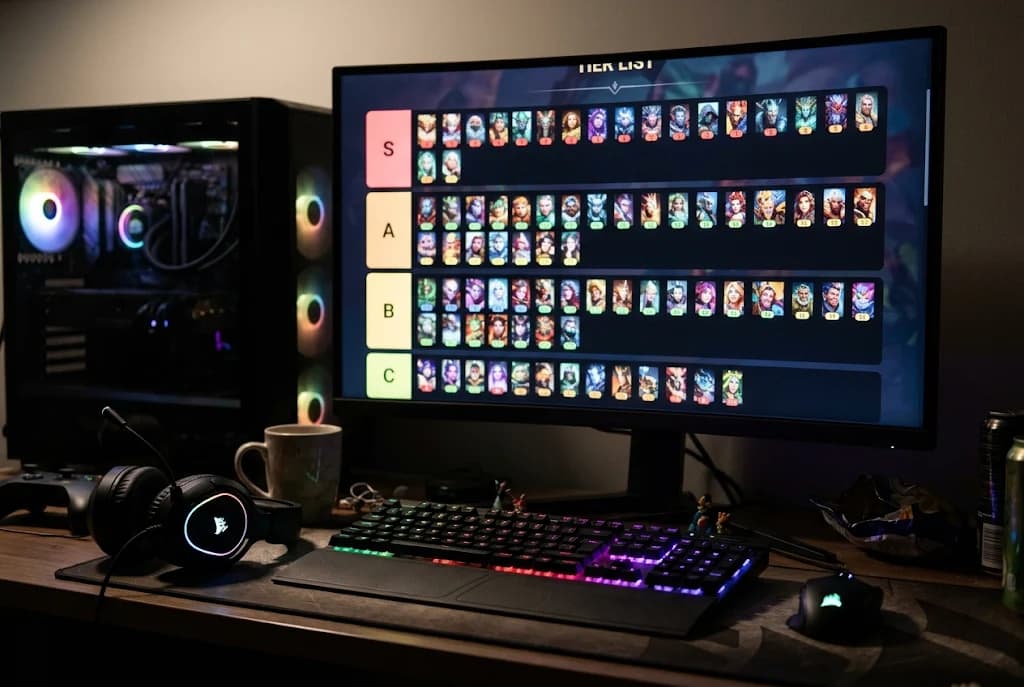
Every Overwatch player has stared at a tier list and asked the same question: should I actually trust this? A tier list is a ranking of all 54 heroes, from S tier (strongest) down to D tier, built from real match data — mainly win rate and pick rate — instead of one person's opinion.
The problem is that most tier lists never tell you how they were made. Two lists can put the same hero in S tier and C tier on the same day, and both look equally confident. This guide fixes that. We will show you exactly how our tier list is calculated, what win rate, pick rate and ban rate each mean, and the mistakes that make players misread rankings — using today's live Season 5 numbers.
An Overwatch tier list ranks all 54 heroes by strength using live match data. Our list scores each hero with a simple formula — 70% win rate and 30% pick rate, standardised across the roster — and excludes heroes picked in under 0.5% of matches from the top ranks. It refreshes daily from a rolling 7-day window of Blizzard's public statistics, so it moves with the meta.
What Is an Overwatch Tier List, Really?
A tier list is a snapshot of hero strength, sorted into bands from S (best) to D (weakest) using real match results. It answers one question: if two equally skilled players picked different heroes, which pick gives the team the better chance of winning right now? The best lists are built from data, not opinions.
The roster now holds 54 heroes — 15 Tanks, 23 Damage and 16 Support — listed on Blizzard's official hero roster. A numbered list of all 54 would pretend we know more than we do. Bands are more honest: the gap between the 3rd and 4th hero is usually noise, but the gap between S and C is real.
Here is what each band means. S tier heroes win more than almost anyone. A tier heroes are strong and reliable, the safe ranked picks. B tier heroes are fine in the right hands and on the right map. C tier heroes are struggling — playable, but you work harder than the enemy for the same result. D tier heroes are the ones to avoid until a patch changes their fortunes.
One more thing: a tier list is a photograph, not a portrait. It describes the last 7 days of play, and a balance patch can move a hero two bands overnight. That is why our live tier list refreshes every day.
How Is Our Tier List Calculated?
Every hero gets a single score from two numbers: 70% of it comes from win rate and 30% from pick rate, both standardised so a strong win rate and a strong pick rate count fairly. Heroes picked in under 0.5% of matches cannot top the ranking, and the whole list refreshes daily from the last 7 days of games.
Win rate carries the bigger weight for a simple reason: winning is the point. A hero with a 54% win rate is doing something right, whatever the forums say. Pick rate earns its 30% because popularity is a real signal too — thousands of players independently choosing the same hero usually means the hero feels strong — but it is a weaker signal, because new and flashy heroes get picked before they are proven.
Standardised just means "compared against the average". A 54% win rate means little alone; what matters is how far it sits above the roster's average. Combine the two standardised numbers and every hero gets one score.
The 0.5% pick-rate floor is the part most lists hide, and it matters. Without it, a hero played in a handful of games could post a fluky 60% win rate and steal the top spot. The floor says: prove it in a real number of games first.
Here is the whole process, in order:
- Pull the data. We take the last 7 days of Blizzard's public hero statistics for every hero.
- Measure the two rates. Each hero's win rate and pick rate over that window.
- Standardise both numbers. Each rate is measured against the roster average, so the two can be combined fairly.
- Combine the score. 70% win rate, 30% pick rate — one number per hero.
- Apply the floor and sort. Heroes under the 0.5% pick-rate floor cannot top the ranking; the rest are sorted into S, A, B, C and D tiers.
The proof is how the list moves. When Season 5 launched on 6 October 2026, the new Support hero Doctrine shot to number one; by 16 November she had cooled to 50.5% win rate and Junker Queen had taken the top spot at 54.6%. In the last monthly comparison, 30 of the 54 heroes changed tier.
What Do Win Rate, Pick Rate and Ban Rate Actually Tell You?
Win rate tells you how often a hero's team wins, pick rate tells you how often players choose them, and ban rate tells you how often opponents refuse to face them. Read together, they describe a hero completely; read alone, each one can mislead you badly.
Win rate, in plain terms
Win rate is the share of games a hero's team wins when the hero is played — the closest thing we have to a direct measure of strength, and the number our win rates page is built around. Its weakness is sample size: a hero played 40 times can look unbeatable by luck alone.
Pick rate, in plain terms
Pick rate is the share of games in which a hero is chosen. High pick rate means players trust the hero — or at least find them fun. Its weakness is hype: a brand-new hero gets picked constantly for weeks, strong or not. Doctrine's early 28.4% pick rate said more about novelty than power.
Ban rate, in plain terms
Ban rate is the share of games in which a hero is banned before play starts. It measures fear, not strength. Tracer currently holds the highest ban rate at 19.1%, yet her win rate sits at 52.0%: feared, but far from unbeatable.
| Metric | What it measures | A high number usually means | Where it misleads you |
|---|---|---|---|
| Win rate | Share of games the hero's team wins | The hero is strong right now | Small samples and one-trick specialists inflate it |
| Pick rate | Share of games the hero is chosen | Players trust the hero | New and flashy heroes get picked before they are proven |
| Ban rate | Share of games the hero is banned | Opponents fear the hero | Fear is not strength — a banned hero may just be annoying |
The honest way to read a hero is all three numbers at once. Moira holds the highest pick rate on the roster at 23.4%, yet her win rate is only 50.7% — the most popular pick in the game is barely above average at winning. Junker Queen pairs the top win rate (54.6%) with a modest 7.1% pick rate: less popular, more effective. Pick rates alone would have sent you to Moira.
What Are the Biggest Mistakes Players Make With Tier Lists?
The biggest mistake is copying S tier blindly. A tier list describes the average across all ranks and all maps; your rank, your aim, your team and the map in front of you change what is actually best for you. Use the list as a starting point, not a script.
Playing heroes you cannot play. A hero you have practised will beat a hero you picked from a list almost every time. If your aim is shaky, the S-tier hitscan pick is not your S tier.
Ignoring your rank. A hero can dominate in Grandmaster and flop in Gold, because skill floors and team coordination are different worlds. Treat the overall list as a guide, and check how a hero performs where you actually play.
Trusting a stale list. Patch day resets everything — the November 3 balance patch is a large part of why Junker Queen sits at number one today. A tier list from a month ago is a history lesson, not advice.
Reading one number. Win rate alone will fool you, pick rate alone will fool you, and ban rate alone will fool you. The three together are the whole picture.
Chasing the new hero. Every season's new arrival gets picked everywhere, wins a lot early, and then settles. Doctrine's arc — number one in October, mid-pack by mid-November — is the pattern, not the exception.
And to be fair: tier lists have real limits. They cannot measure synergy with your team, fit for a specific map, or your own skill. They describe the past 7 days, not your next match.
Frequently Asked Questions
Who is the best hero in Overwatch right now?
As of 16 November 2026, Junker Queen tops our tier list with a 54.6% win rate — the highest on the roster. Zenyatta and Brigitte follow close behind. Rankings shift with every balance patch, so check the live list before you lock in.
How often does the Overwatch tier list change?
Our list refreshes every day from a rolling 7-day window of Blizzard's public hero statistics. Small moves happen daily; big moves follow balance patches. In the last monthly comparison, 30 of the 54 heroes changed tier.
Is the tier list the same for every rank?
No. A hero can dominate in Grandmaster and struggle in Gold, because skill floors and team coordination differ wildly by rank. Treat the overall list as a starting point, then check how a hero performs at your own rank.
Why is a hero with a high win rate not in S tier?
Usually because almost nobody plays them. A hero picked in under 0.5% of matches is excluded from the top ranks, since a handful of games can fake a great win rate. Popularity has to back the number up.
Should I only play S-tier heroes?
No. A hero you play well will beat a hero you picked from a list almost every time. Use the tier list to shortlist strong options, then play the one that fits your aim, your team and the map.
Conclusion
The tier list is a compass, not a cage. It tells you where the meta is pointing — right now, toward Junker Queen, Zenyatta and Brigitte — but it cannot play the game for you. Your action step: open the live tier list, check the top three heroes in your role, and spend this week learning one of them properly. That is how a ranking turns into actual wins.